Trust: The Growth Multiplier for Health Insurers

Trust: The Growth Multiplier for Health Insurers

It’s undeniable: trust is the lifeblood of health care. If you’ve ever hesitated before seeking medical advice or felt unsure about a prescribed treatment, you’ve felt the ripples of mistrust. These moments of hesitation can lead to poor health outcomes and even jeopardize lives. Trust isn’t just a warm, fuzzy feeling; it’s a matter of life and death. When consumers trust, they engage, and engagement leads to better outcomes. It’s a simple equation, but building trust is no small task.

A stark reminder: according to Gartner, a whopping 90% of customers would distance themselves from brands that break their trust. Why? Because trust intertwines with shared values. When consumers trust, they buy, they stay loyal, and they advocate for the brand. In the absence of trust? Even the most enticing offer rings hollow. 81% of consumers won’t engage with a brand they can’t trust.

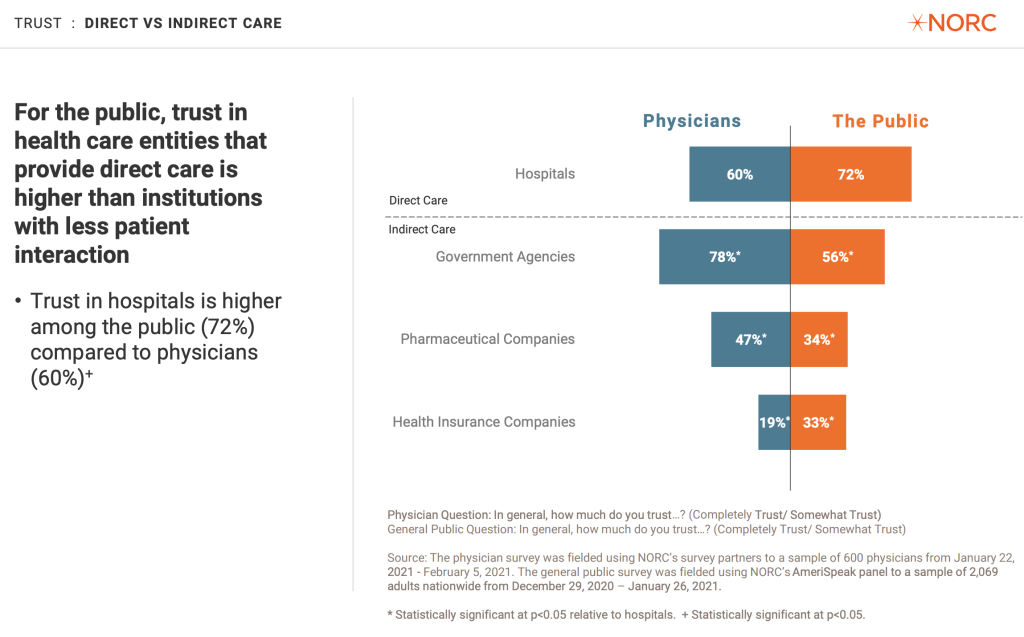
Alarming trends show that over the past decade, trust in major U.S. institutions has declined rapidly. However, amid this backdrop, businesses, especially those in the health care sector, have emerged as beacons of trust for many Americans. This trust must not be taken lightly.

Gone are the days when glossy ads could mask mediocre offerings. With today’s tech-savvy consumers, alternatives are everywhere. The power of choice is enormous, and consumers navigate this sea of options by aligning with companies they trust.

For health care payers, this trust comes with unique opportunities. To nurture and expand it, they need to provide experiences that resonate with their clients’ values and expectations. These aren’t just abstract concepts; they translate into concrete actions: 

  1. Simplifying the Shopping & Enrollment Experience: A complex process frustrates and pushes clients away. By enhancing voice of customer (VOC) efforts and optimizing customer journey maps around next-best actions, payers can streamline this journey, making it easier and more intuitive.

  2. Deliver Desired Digital Engagement Options: It’s no longer optional. Offering features like digital membership cards, online appointment scheduling, and easy electronic prior authorizations aren’t just conveniences; they’re necessities. A personalized digital touch enhances trust, ensures transparency, and streamlines communication.

  3. Increasing Collaboration: When health care providers and payers collaborate, the patient benefits. Clear, unified messaging, and a cohesive approach eliminate confusion and ensure patients feel taken care of.

Maximizing Satisfaction and Trust Through Informed Choices in Health Care

The premise that choice is beneficial is widely accepted. However, its connection to satisfaction and trust is more intricate than one might presume. The utility of having options follows the law of diminishing returns: each successive alternative detracts slightly from the overall sense of contentment until the advantages plateau. For example:

A consumer might opt for a copper-grade health plan primarily attracted by its affordable monthly premiums. Yet, when they begin using this plan, unforeseen medical bills from doctors or pharmacies may catch them off guard. This situation can lead the consumer to feel misinformed about their coverage, perhaps even regretting their choice. They might end up blaming the health care plan or provider, and subsequently, share their grievances with others.

Health care institutions face a pressing challenge: discerning the optimal range of choices and guiding consumers towards the best-suited options. Those that strike the right balance will undoubtedly prosper.

To elevate the purchasing and onboarding experience, and in turn foster customer trust, health care entities should zero in on two pivotal strategies: amplifying their Voice of Customer (VOC) programs and refining their Customer Journey Maps.

1. Amplifying Voice of Customer (VOC) Initiatives:

As highlighted by Kinza Yasar at Tech Target, the VOC program is paramount for a stellar customer experience (CX). It’s a structured endeavor to fathom the expectations, desires, and preferences of customers concerning your offerings.

So, how should health care organizations amplify their VOC activities?

Begin by scrutinizing internal metrics that trace customer interactions at various stages: pre-purchase, during purchase, post-purchase, and recurrent engagements throughout their first year.

Analyze diverse datasets like shopping cart abandonment rates, chatbot interactions, customer call recordings, and satisfaction surveys. Such analysis can shed light on the mindset of potential customers at the outset, pinpointing prevalent questions or doubts and understanding their choices.

Armed with these findings, health care entities can tailor their offerings, ensuring they are both personalized and in the best interest of the patient, leading to enhanced trust and potentially, a surge in customer satisfaction and loyalty.

2. Refining Customer Journey Maps

Dana Miranda and Rob Watts describe customer journey maps as graphical narratives of a customer’s interaction with a brand. It chronicles each touchpoint, highlighting both positive and negative emotions experienced.

For health care entities, it’s vital to capture not just the ideal journey, but also potential deviations, encompassing all desired and actual customer actions. A comprehensive customer journey map can pinpoint areas needing enhancement, from refining care delivery to revising employee training modules.

Centralizing process enhancements around these customer journey maps ensures that health care payers not only meet but exceed customer expectations. By eliminating friction points, they can bolster consumer trust, reaffirming that customers have indeed made the right choices.

Digital Engagement: The New Norm in Health Care Trust and Communication

A recent article from the Harvard Business Review highlighted that a staggering 84% of health plan members are inclined towards digital solutions. They prefer monitoring claim statuses, accessing ID cards, utilizing digital wallets like Apple Pay and Google Wallet, and retrieving essential documents such as benefit explanations via online platforms. Moreover, the convenience of mobile apps for comparing health plans, setting appointments, identifying nearby pharmacies, and managing prescription refills is highly sought after.

Such a digital transition offers health care payers a golden opportunity to fortify the trust of their members. As Christopher Lis, Director of Global Healthcare Intelligence at JD Power, aptly remarks, “Establishing a relationship as a trusted health partner right from the start is a big opportunity to advance forward.”

The pivot towards digital communication and self-service tools is not merely a nod to consumer preference. It’s also a strategic move towards operational efficiency. To illustrate, one predominant grievance among health plan members is the tedious wait while on hold for customer service. By integrating the desired digital communication tools and automating certain services, not only can providers mitigate these wait times but also curtail operational costs, thereby elevating overall member contentment.

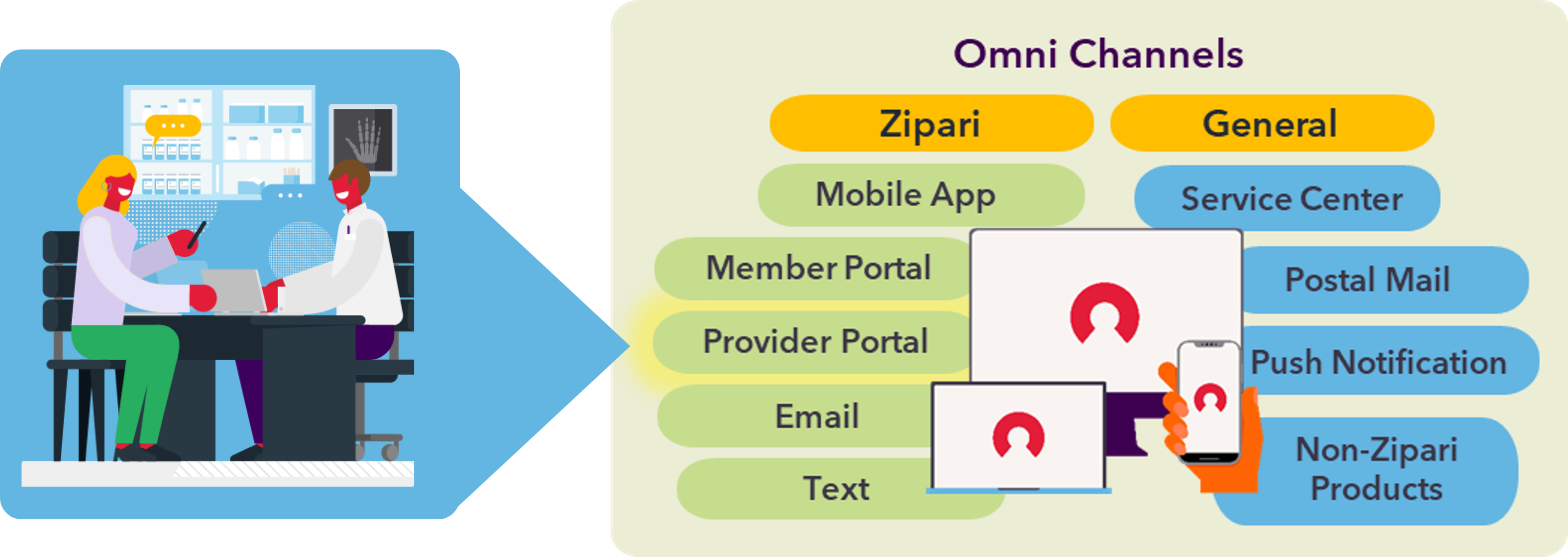
However, to genuinely resonate with members and augment their trust, the cornerstone of digital engagement must be personalization. Tailored communication ensures the delivery of relevant information to the appropriate individual at the opportune moment. Utilizing an omnichannel strategy to convey these targeted messages is paramount. After all, health care messages that echo a member’s personal journey invariably garner higher trust and credibility.

Fostering Trust and Collaboration in Health Care through Effective Communication

Ensuring that members receive top-tier care is a fundamental goal for health plans. Not only does this cater to members’ expectations, but it also considerably mitigates overall health care expenditures. The key to achieving this lies in seamless collaboration between health plans and providers.

However, an underlying tension persists between providers and payers. Members often bear witness to their health care providers voicing grievances about their health plans, which is not a palatable experience. One primary catalyst behind this strain is a disconnect in communication between health plans and providers.

What could be explain the rising tension between providers and payers? Consider this scenario:

A health plan identifies the need for a member to undergo preventative care, like a mammogram or a colonoscopy. The usual protocol involves the health plan reaching out directly to the member, prompting them to undergo the procedure. This direct communication can unintentionally ruffle the feathers of the provider catering to the member, as it seemingly bypasses their role in patient care. This perceived encroachment can give rise to the sentiment that the health plan is impeding the provider's direct line of communication with their patients.

To harmonize relationships and enhance collaboration, it’s pivotal for payers to adopt an integrated, omnichannel approach. Instead of directly addressing the member, payers should relay pertinent information to the provider, enabling them to guide their patient accordingly. Such an approach not only alleviates tensions between the two parties but also amplifies the likelihood of patients promptly accessing necessary services. Moreover, a harmonious rapport between payers and providers invariably bolsters members’ confidence in the medical guidance they receive.

The Pinnacle of Health Care Trust: Customer Experience

The voice of the health care consumer is clear and decisive. Their loyalty and trust are not just driven by the health care services provided, but by the entirety of their experience. They vote with their wallets, and the unanimous decision is that customer experience (CX) holds unparalleled importance in their health care journey.

Reflecting upon our recommendations, it’s vital to recognize the digital evolution of today’s consumer. In an era dominated by digitization, health care consumers anticipate an experience that not only addresses their health-related needs but does so with precision, convenience, and empathy. They seek a seamless process, from simplified shopping and plan enrollment to digital engagement avenues that align with their preferences.

Beyond these direct consumer interactions, building an ecosystem of trust in health care also requires fostering genuine collaboration with key stakeholders in the industry. The bridge between health care payers and providers must be robust and free of friction, ensuring that the patient’s best interests are always at the forefront.

However, embarking on this journey of trust-building and delivering an unmatched CX isn’t a task to be taken lightly. It requires the expertise of a firm that doesn’t merely understand the landscape but has sculpted industry-leading solutions tailored for health care. Zipari stands as a beacon in this realm, offering pioneering CX solutions that are purpose-built for health care. The pathway to establishing unwavering trust with health care consumers is intricate, but with the right partner, health care payers are ensured a future where excellence in customer experience becomes the norm, not the exception.

Contact us for more information or to schedule a meeting.

Find your potential ROI with Zipari’s Consumer Engagement Hub:  Schedule a CX opportunity evaluation!

Learn how Zipari can fuel top-line growth for your firm:  Follow us on LinkedIn

Picture of Dr. Tabatha Erck, Ed.D., MPA

Dr. Tabatha Erck, Ed.D., MPA

Tabatha Erck is the President and Chief Executive Officer at Zipari, having more than 25 years of experience in the industry. Tabatha is results-oriented with a strong track record of performance in turnaround and high-paced organizations. She excels at strategic thinking, planning, and execution. Her work reflects her dedication to reducing health care costs while increasing health care quality, and access.

Further Reading:
  1. Gillespie, Penny, Dale Kutnick, and Nadine LeBlanc. Drive Revenue and Customer Satisfaction by Building Trust. Gartner, February 15, 2022.
  2. Glasgow, Amanda. Edelman Trust Barometer Special Report: In Brands We Trust? Edelman, June 18, 2019.
  3. Samson, Dave. Business: An Unshakable Force in a Polarized World. Edelman, January 15, 2023.
  4. Gray Haupt, Courtney. Maintaining Trust as the Definition of Health Evolves. Edelman. April 18, 2023
  5. Schwartz, Barry. More Isn’t Always Better. Harvard Business Review, August 1, 2014.
  6. Buchter, Jessica, Jenny Cordina, and Mark Lee. Driving Growth through Consumer Centricity in Healthcare. McKinsey & Company, March 14, 2023.
  7. Mathis, Sandra. Why Businesses Need Voice of the Customer Analytics. Customer Experience. TechTarget June 23, 2021.
  8. Daniels, Kristin. Fuel Top Line Growth Across Market Segments. Zipari.com, March 2021.
  9. Yasar, Kinza, and Sarah Amsler. Voice of the Customer (VOC). Customer Experience. TechTarget June 30, 2023.
  10. Corliss, Ragan. The ROI of CX—Five Steps to Driving Highest-Value Member Engagement. Zipari, July 1, 2023.
  11. Miranda, Dana. Customer Journey Map: Everything You Need To Know.” Forbes Advisor, August 7, 2022.
  12. Cognizant. What Consumers Want Online from Their Health Care Plans. Harvard Business Review, December 6, 2016.
  13. Waddill, Kelsey. First Impressions Count: How Onboarding Affects Member Engagement. HealthPayerIntelligence, July 26, 2023.
Zipari Staff

› Back to Insights