Zipari’s President and CEO, Dr. Tabatha Erck presented the ROI of CX at the AHIP 2023 Conference. This is an excerpt from the first part of her presentation. Subscribe to our email list and follow us on LinkedIn to be notified of subsequent articles on this topic.
Let’s Start With One Big Question– Does 10% Or More of Your Membership Engage With Your Member Portal and/or Your Mobile Platform?
In this series of short articles, we analyze the strategies that are working for payers who are reaching a 10% or higher rate of member engagement, and how an effective engagement strategy can help you achieve your revenue and member health goals.
First a Little History on the Pressures Payers Have Been Facing
About 35 years ago, the market was nothing like it is today. We were setting up claims and AS/400 systems. Many health plans still use these, however the big dynamic at that point in time was that we were all pursuing the commercial business. We were looking at employer groups and asking questions such as, “What does this airline or manufacturer need?” Then we would come back to the office and say we just met with so and so, and this is what they’re looking for us to build. It was a business-to-business model. We built our systems. We trained our people, and so forth. Now many of us are filling health plan executive officer roles.
Consequently, a good portion of our experience comes from that business-to-business model. It’s fascinating what has happened recently and the bottom line is, in 2000 there were 6.6 million people enrolled in Medicare Advantage. By 2030, most of the population will be enrolled in Medicare Advantage. As Dr. Erck said “By the way, 2030 is like tomorrow. If you haven’t planned for it, you’re hosed. We’re going to go through an enrollment period that will be a blur, and then we’ll come out on the other side.”
The Direct-To-Consumer Side Is Now Almost the Same Size as the Commercial Business Side
The dynamic that is going on right now is that our payer models were all built off of legacy systems that were developed for commercial business, i.e. the business-to-business model. If you’re struggling, it’s totally okay. It’s expected. In the market today, individual, family and Medicare Advantage plans are starting to dominate the market. According to Dr. Erck,
“This is the first time in the history of the United States that individual, family, Medicaid and Medicare Advantage are almost the same size as the commercial business side.”
They’re tapping on each other’s doors at this point.
While Enrollment in Public Health Insurance Programs Surges, The Total Available Market of Commercially Insured Patients Is Shrinking

Source1. Click image for larger view.
Big Shifts in the Market
It’s not surprising if your systems and processes are not prepared to respond to the direct-to-consumer model. It might be difficult to have a new strategy conversation with your executive leadership team. They want to know, “Did we land that account? What about that really big one?” Your response is, “But we have 25,000 individuals”, and they say, “Yeah but what was the cost to acquire those?” and
“Which category was generating most of our profit? In many cases it’s the government program customers.”
Other Shifts Are Also Taking Place
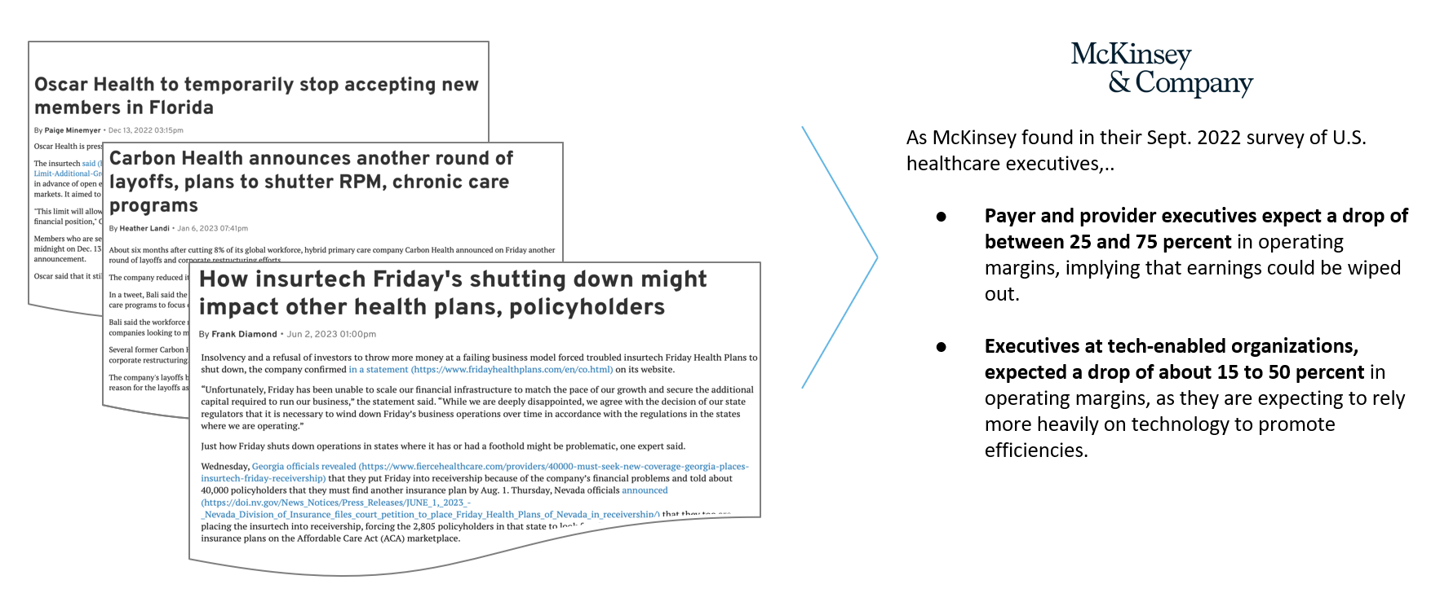
Some new shifts are driving new dynamics for payers as well. There are some big health plans that do some pretty cool stuff in the market. They started changing the direction of health plans, but they didn’t make it. Now all their members are going back into the marketplace and getting reassigned to other health plans. According to Dr. Erck,
“These consumers have different desires and needs then maybe what you provide today.”
There’s an Opportunity To Learn from These Disruptive Companies That Went Under
You can gain a bit of knowledge by having dialogues with these innovators. Dr. Erck said, “There are some pretty amazing things they did that actually drove changes in the market and will continue to push the market to move forward.” Sadly, it was the result of the reserve requirements in our current interest rate environment that forced these companies to go under. However, we should be asking them questions such as, “How did you do it? What were you doing? What did you leverage? What systems did you use? Who did you bring in? What expertise did they have? Who did you partner with?” We have a webinar coming that will focus on this topic. Subscribe and follow us on LinkedIn. We’ll keep you informed.
Today’s High Interest Rate Environment Has Inhibited Lending to Some Insurtech Startups and May Push Unsteady Players Into Insolvency
Click image for larger view.
So What Does CX Actually Mean?
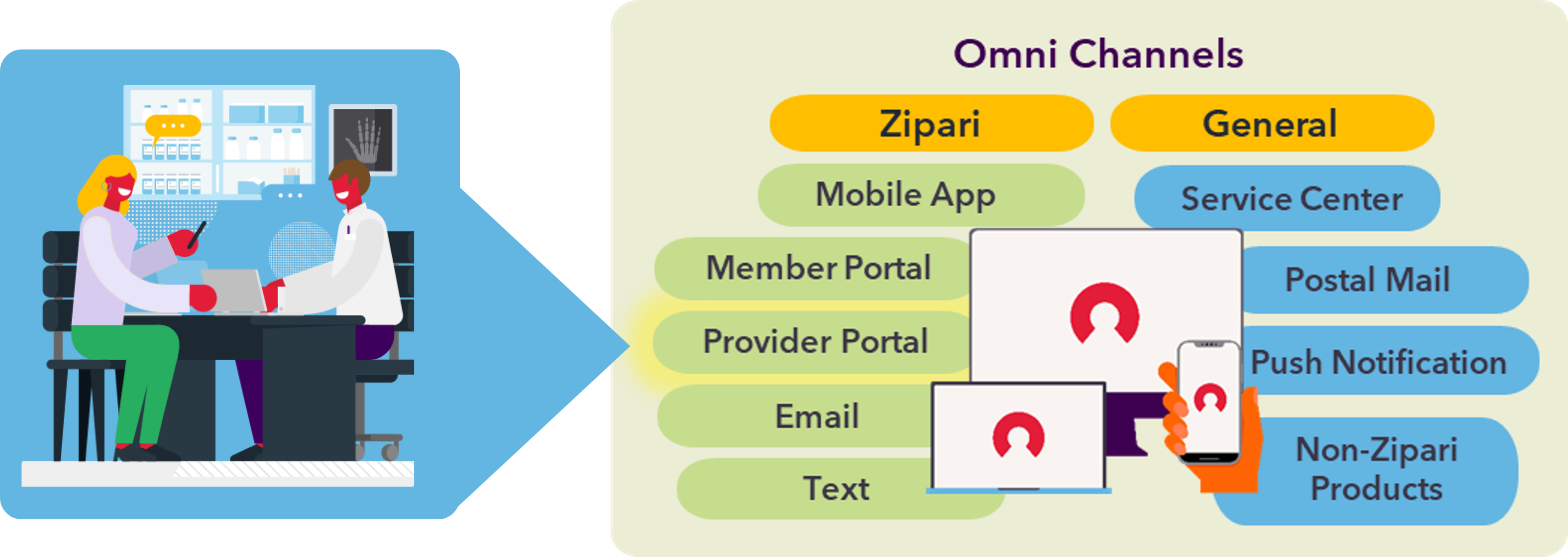
As specialists with deep experience in the payer industry, Zipari defines Consumer Experience (CX) in health insurance as a member’s holistic connection with all the channels, touchpoints, programs and systems that payers set up to facilitate their personal health activation. Dr. Erck stated,
“When done right, you can drive not only higher revenue, but also drive predictive, personalized, proactive and preventative member healthcare results.”

Image ©Zipari.
These Member Communication Channels Cover the Entire Spectrum
Whether through your call center, email campaigns, traditional mail, working with a broker who does business with you, or the standard member materials that are mailed out. Next, we’ll discuss the importance of strategy when establishing an effective CX program in your company.
Coming up next in this series…
CX Powers Strategy: Payers With the Most Effective CX Strategies Won’t Just Survive, They’ll Thrive!
Remember to Subscribe to our email list and follow us on LinkedIn to be notified of the subsequent articles covering Dr. Erck’s presentation. Also contact us if you’d like to learn more about Zipari’s CX solutions.
1Note: 2022-2032 Medicare and Medicaid enrollment numbers represent projections.
Source(s): Trilliant Health national consumer database. U.S. Congressional Budget Office Baseline Projections for Medicare and Medicaid.