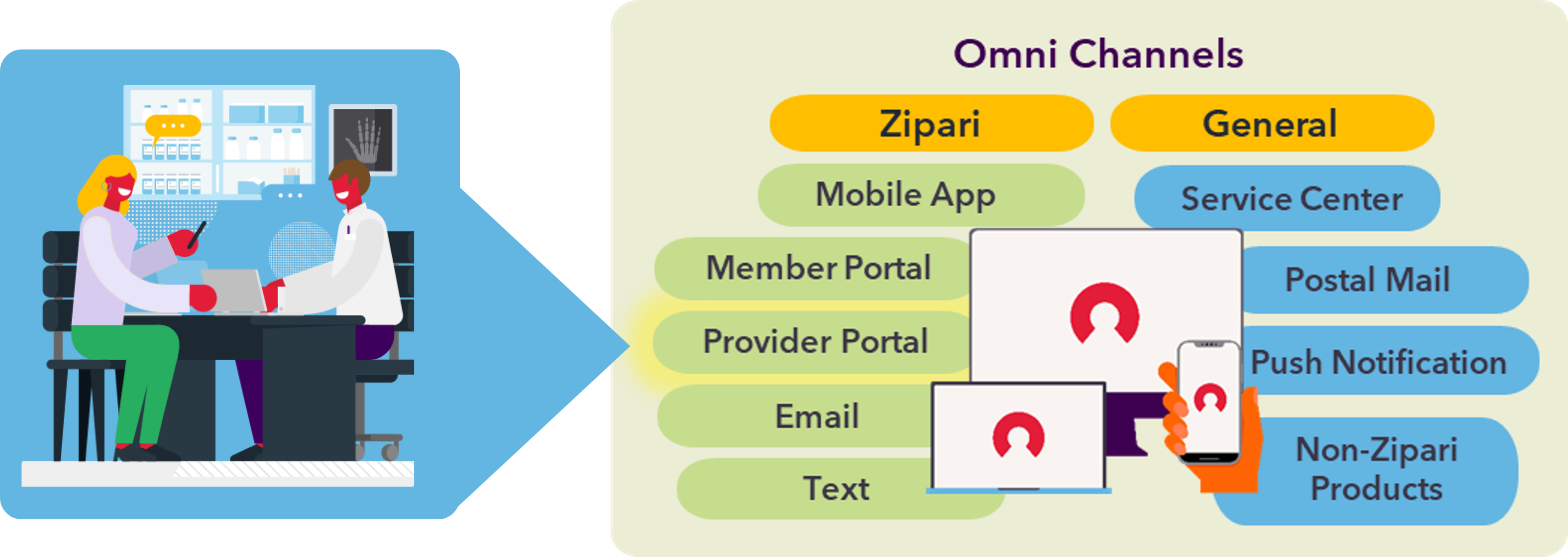
Digital technology is rapidly transforming the health insurance industry by providing the ability to engage with members in new and exciting ways. Member engagement starts at time of purchase or enrollment, continues through their health care journey, and starts all over again at renewal.
While developing a custom built digital technology solution may seem like the best way to maintain your brand and provide a point of differentiation, it often requires substantial resources, budget and personnel, to create, implement, and maintain. In most situations, working with a reputable partner to deploy a proven solution will allow companies to implement the technology quickly, save money while achieving their goals, and free resources from the continuous upkeep burdens.
Purchasing and implementing Software as a Service (SaaS) digital engagement technology (e.g., member portal, mobile app, provider portal, broker portal, employer portal, text and email messaging, consumer engagement, etc.) might seem like you are getting less than if you built it yourself. I would argue that is not true in most situations. If the SaaS solution gets the company to 80-85% of their goal quickly and cost effectively, the company can use the savings to add supplemental services needed to achieve their goals. By taking this approach, the health plan can quickly implement and truly gain a competitive advantage year after year because the SaaS company will continue to invest in the platform.
Let’s look at an example:
I could buy a car or I build a car – both are currently available today. There are also a variety of cars in the market so access and selection are not a restriction. If I build a car, it is going to take me a lot longer, it will cost me more, and I will most likely not have anywhere near the features I would get from purchasing a car.
Now you might be saying to yourself, that car doesn’t include many of the features I want and need because I have to buy one off the lot. While that is true, you can buy a base model car and use the savings to add the extra features you need to maintain your brand and differentiate your car in the market. In most cases, it is less expensive, you can get the car much faster, add the features for less money, and now have a car that isn’t like any other car in the market.
Products like cars are considered commodities. In most cases, it is not a sound business approach to custom build a commodity (e.g., member portal, mobile app, provider portal, broker portal, employer portal, etc.).
For health plans concerned about having a generic-looking SaaS software, it’s crucial to select a product that allows for configuration to align with your brand needs. One client success story effectively demonstrates this :
Consider ‘HealthFirst,’ a prominent, major U.S. health insurance payer, which underwent a significant transformation during the COVID-19 crisis by adopting Zipari’s technology. This strategic decision represented a shift from traditional in-house development to a more agile ‘buy-integrate-configure’ approach. Partnering with Zipari enabled HealthFirst to rapidly deploy and integrate new digital solutions, significantly cutting down on time and costs. This shift not only focused on creating customer-centric solutions but also enhanced their ability to leverage data, improving agility in responding to market changes.
So, when should a health plan consider building their own CX technology solutions? Building is advisable for health plans who require custom programs for their clients. For instance, a health plan serving large self-insured employers requiring unique experiences for each customer might find building a more cost-effective option than buying. Why? In this situation, the plan would have to pay for those unique and custom features over and over again instead of paying for it once and using it for thousands or even millions of members. And, as always, buyer beware: pursuing an in-house build model could increase their costs substantially and make their products less competitive in the future. Every hour spent on developing, fixing, managing and maintaining their software is an hour not spent on staying ahead of their competition. Internal resources will be siphoned away to support the initiative.
One more thing, if your level of consumer engagement is not where you want it to be, please note that a new member portal and mobile app alone won’t suffice to elevate consumer engagement levels; this requires a well-crafted consumer engagement strategy. To make your consumer engagement strategy actionable, it requires metrics, alerts, notifications, and personalized outreach. Adding those actions to the solution will dramatically increase the scope of engagement and adoption.
Crafting a consumer engagement strategy that resonates with your members is more than just implementing new technology; it’s about truly understanding their needs and journey. This is where Zipari excels. We bring a unique blend of technology and expertise to help you develop a strategy that’s not only aligned with your health plan’s goals, but also genuinely engages your members. From analyzing member interactions to tailoring communication channels, we’re here to guide you every step of the way.
If you’re weighing the options of building versus buying or just starting to sketch out a consumer engagement strategy, let’s connect. Our team at Zipari is ready to share insights and collaborate with you to drive success in this ever-evolving digital landscape.
Contact us for more information or to schedule a meeting.
Find your potential ROI with Zipari’s Consumer Engagement Hub: Schedule a CX opportunity evaluation!
Learn how Zipari can fuel top-line growth for your firm: Follow us on LinkedIn